Crash Raiders Strategy Guide
Expert analysis of cash-out timing, bankroll management, and mode selection for Crash Raiders.
Understanding RTP & Volatility
Before exploring specific strategies, it's essential to understand the fundamental mathematics of Crash Raiders. The game is configured by operators with an RTP (Return to Player) typically ranging from 96% to 97%. This means that over a large enough sample of rounds, the game returns 96–97 cents for every $1 wagered. This figure holds over millions of rounds — individual sessions can deviate significantly above or below this average.
Crash Raiders is classified as a high-volatility game. This means individual rounds produce extreme outcomes on both ends — short explosive sessions with large wins or rapid consecutive trap hits that drain a session bankroll quickly. High volatility games require larger bankrolls relative to your bet size to weather the variance and survive to the winning streaks.
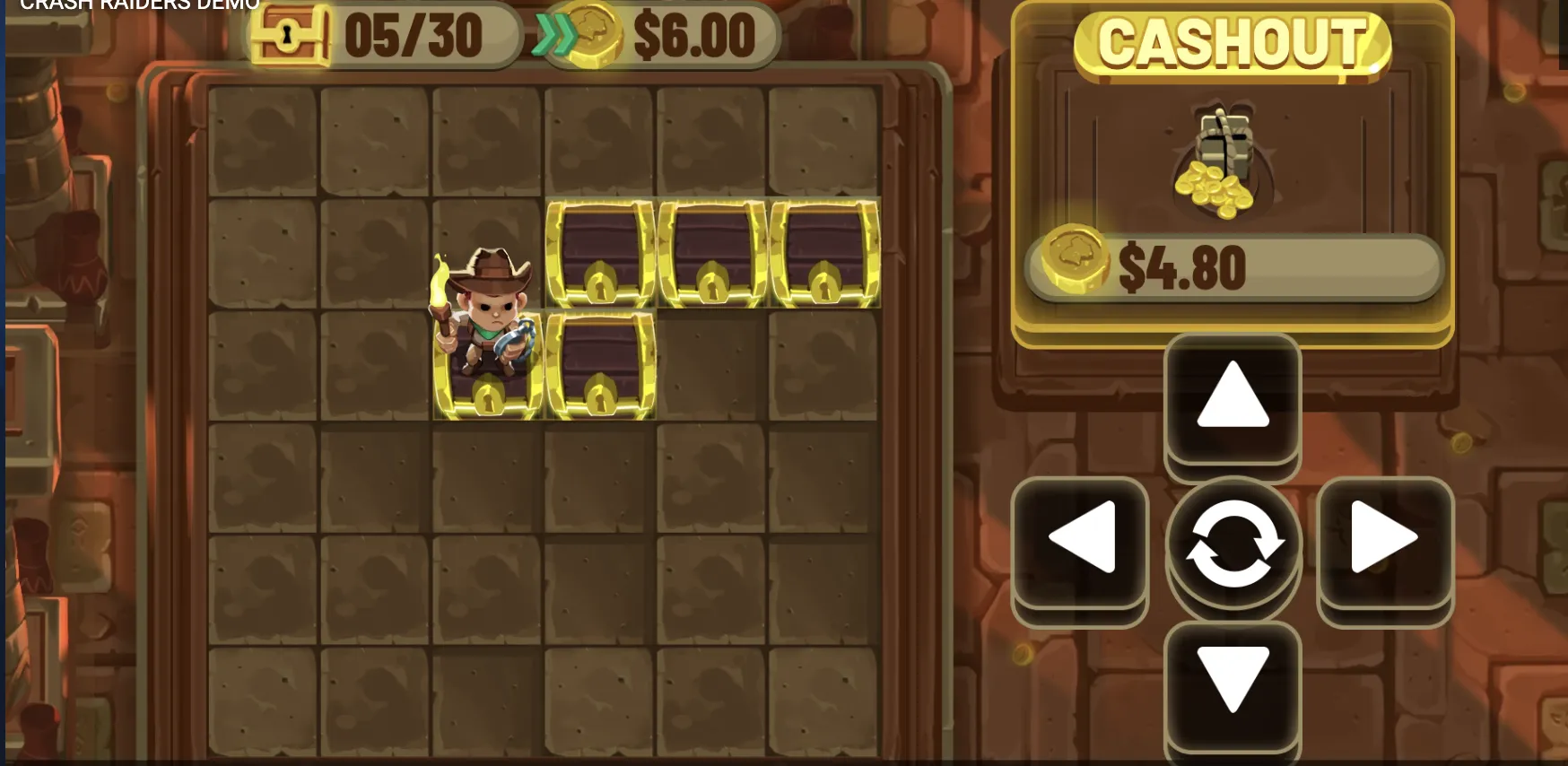
Multipliers accumulate with each safe cell revealed in Crash Raiders
Core Cash-Out Strategy
The most critical strategic decision in every round of Crash Raiders is timing your cash-out. This is a pure risk management exercise — there is no "correct" answer, but there are rational frameworks you can apply based on your goals and risk tolerance.
📊 The Fixed Multiplier Target Strategy
Set a pre-determined cash-out multiplier before each session and stick to it. For example, decide you will always cash out when your accumulated prize reaches 2x, 3x, or 5x your bet — regardless of how safe the remaining cells appear. This approach removes emotional decision-making from the equation and enforces consistent discipline. The discipline is the strategy: avoiding the temptation to "push just one more cell" is what separates systematic players from chasing players.
🎯 The Cells Remaining Strategy
Rather than targeting a multiplier, set a rule around how many cells you'll reveal before cashing out. For example: reveal a maximum of 5 cells in any round, then cash out regardless of outcome. This approach naturally limits your exposure to late-game trap density — as more cells are revealed, the proportion of remaining traps to safe cells increases, making each additional click statistically riskier.
💰 The Profit Lock Strategy
Once your accumulated prize exceeds your original bet (i.e., you're in profit), switch to ultra-conservative play. Reveal one more cell maximum, then cash out. The logic: your initial risk capital is now protected by existing profit. Any further play is, effectively, risk-free from a net session perspective. This strategy works well in Normal Mode where you can visualize remaining cells and have genuine agency over your exit point.
Game Mode Strategy Selection
Normal Mode for Beginners
Always start with Normal Mode. Configure a small grid with low trap density to maximize rounds played and minimize the variance of your learning curve. A 3×3 grid with 2 traps gives you excellent odds of surviving multiple cells while still delivering meaningful prize accumulation. Use this configuration for your first 50+ rounds.
Turbo for Session Volume
Use Turbo Mode when you have a fixed session bankroll and want to maximize entertainment rounds. Set a strict loss limit before starting — say, 30% of your session bankroll — and stop if you hit it. Turbo's speed makes it easy to lose track of volume, so disciplined stopping rules are essential.
Mystery for Experienced Players
Reserve Mystery Mode for sessions where you've already secured profit and want to "gamble the winnings." The randomized configuration removes all strategic input, making it a pure entertainment mode. Never start a session with Mystery Mode — use it as a bonus round when you're playing with house money.
Mode Switching Strategy
An advanced approach: begin each session in Normal Mode with conservative settings to build a profit base. Once you've achieved a 30–50% profit above your session buy-in, switch to Mystery Turbo for the remainder of the session. You're maximizing fun while limiting your actual downside risk to a known amount.
Extra Life Tactical Usage
The Extra Life mechanic offers a unique strategic layer that many casual players underutilize. Here's how to think about it systematically:
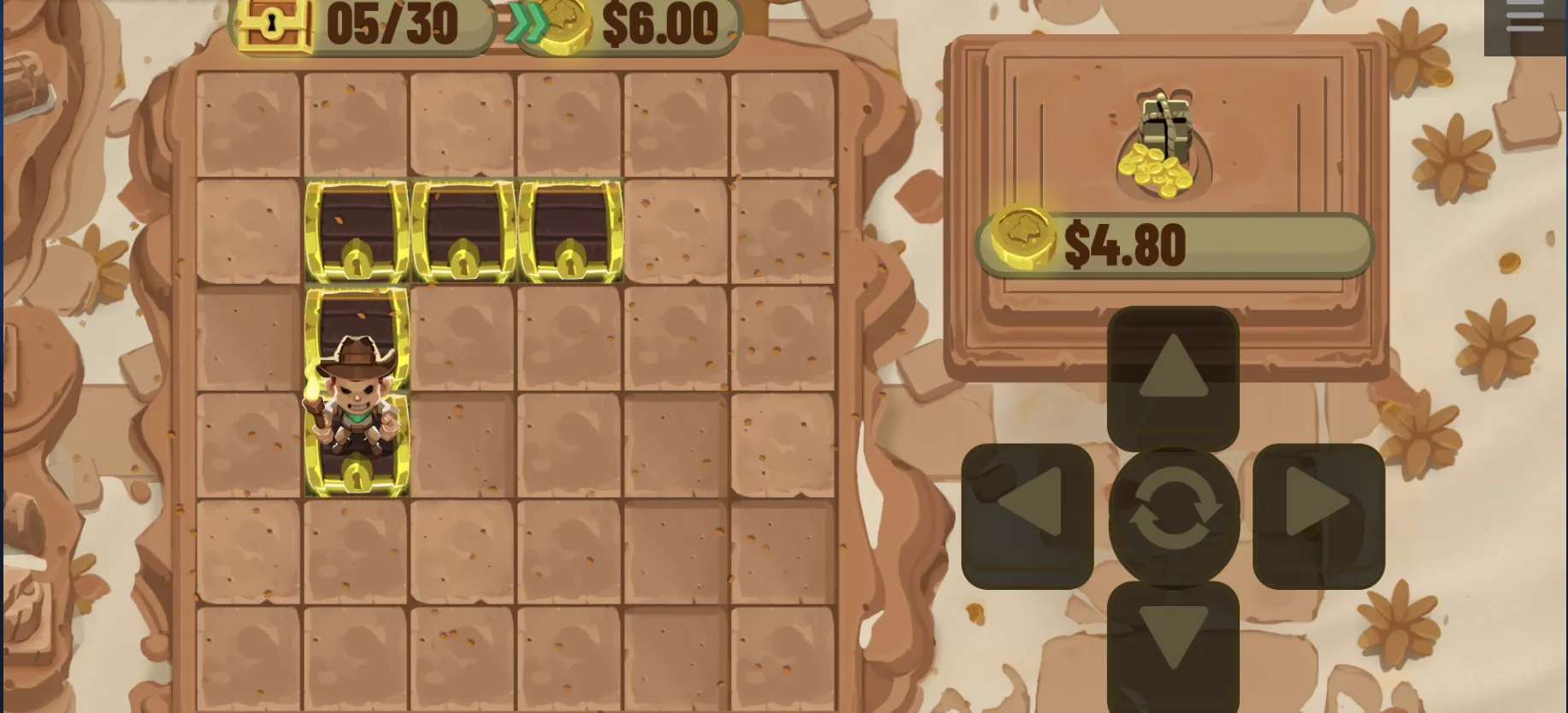
The Extra Life mechanic preserves your winnings when hitting the first trap
Use Extra Life to extend into medium-risk zones. The rational use of the Extra Life is to push slightly further into the grid than you would without it. In Normal Mode with a 4×4 grid containing 4 traps, you'd normally cash out after revealing 6–7 safe cells. With Extra Life active, you can rationally push to cells 8–9, knowing one trap will be forgiven. The mathematical advantage: your expected value per round increases because you're accessing higher-multiplier cells with a safety net for the first trap encounter.
Don't rely on Extra Life as a deep-game safety net. Players who use the Extra Life to justify revealing 80%+ of a grid are making an error. The Extra Life doesn't reduce trap frequency — it only forgives the first hit. With many cells remaining revealed, the probability of hitting a second trap before reaching a desirable cash-out point is high. Use Extra Life to push one tier deeper into the grid, not to complete near-full reveals.
Bankroll Management Rules
Session Bankroll Rule
Never bring more than 50–100 bet units to any single session. At a $1 bet, that means a session bankroll of $50–$100. This provides enough runway to weather variance while limiting total exposure to a comfortable amount.
Stop-Loss Rule
Set a hard stop-loss at 40% of your session bankroll. If you lose $40 of your $100, the session ends — no exceptions. This prevents the common pattern of chasing losses by doubling bet sizes, which accelerates bankroll depletion exponentially.
Take-Profit Rule
Set a session win target — typically 50–100% of your starting bankroll. If you hit it, bank 80% and play the remaining 20% for fun. This guarantees you walk away with net profit on winning sessions rather than giving it all back chasing bigger wins.
Bet Sizing Rule
Your bet per round should be no more than 2–3% of your session bankroll. At $100 per session, maximum bet is $2–$3 per round. This sizing ensures you have at least 33–50 rounds in any session, providing adequate statistical sample to experience the game's variance fairly.